MCRS-2026

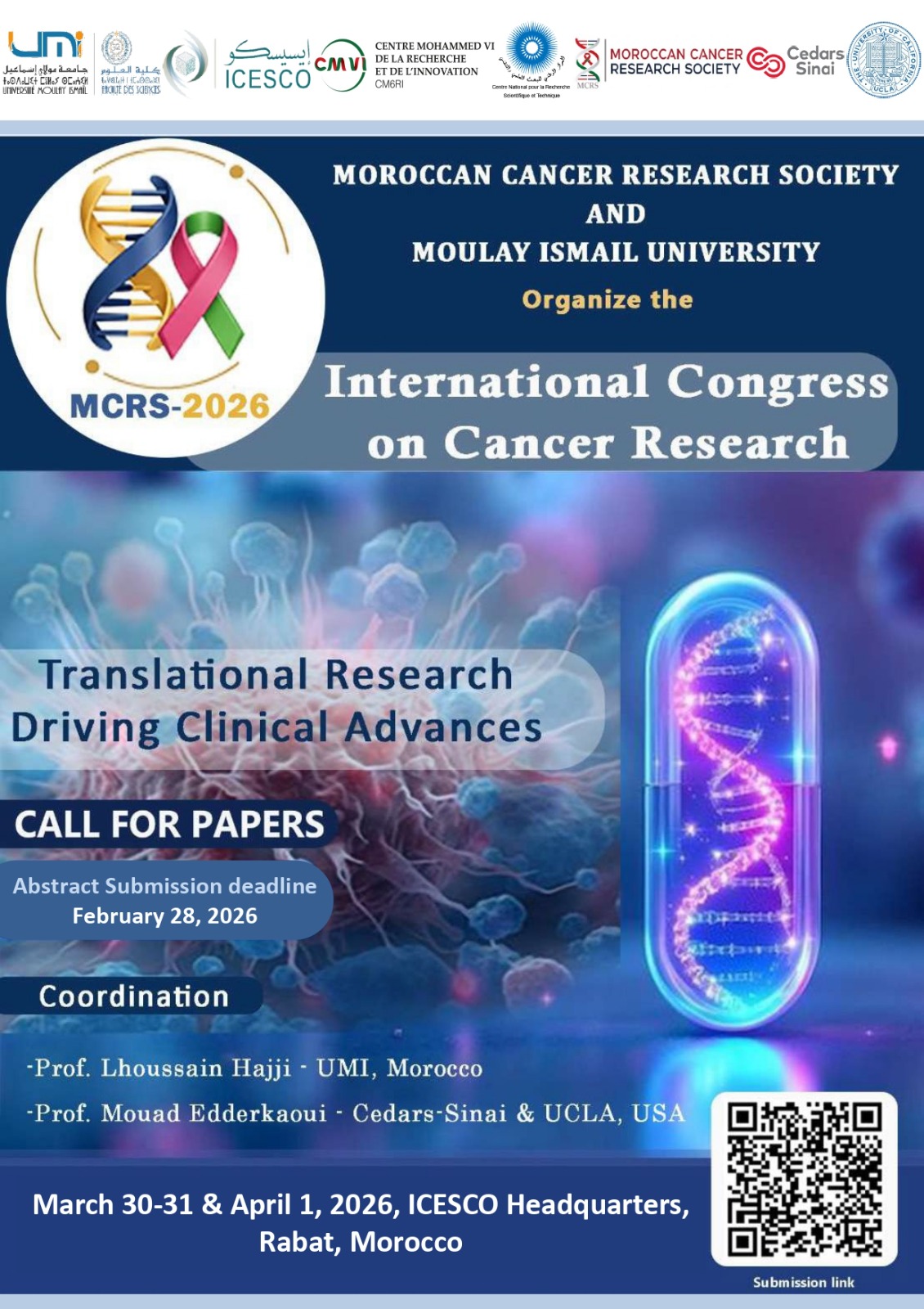
MOROCCAN CANCER RESEARCH SOCIETY AND MOULAY ISMAIL UNIVERSITY Organize the 2nd Annual Cancer Research Congress

Translational Research Driving Clinical Advances

March 30-31 & April 1, 2026 ESESCO, Rabat, Morocco

whatsapp image 2026 02 22 at 10.07.57

MCRS-2026​

Rationale

Cancer continues to represent a major global health challenge, characterized by complex molecular heterogeneity, dynamic tumor microenvironments, and variable patient responses to therapy. Despite significant progress in understanding oncogenic pathways, epigenetic regulation, and tumor immunology, the translation of fundamental research into clinical interventions remains limited. The Moroccan Cancer Research Society 2026 (MCRS-2026) provides a dedicated platform for integrating basic, translational, and clinical oncology research, fostering interdisciplinary collaboration among molecular biologists, oncologists, bioinformaticians, and healthcare innovators.

Scientific objectives of MCRS'26 include:

66629731a5ccce8016f50d94a5f106d1
  • Disseminating cutting-edge discoveries in cancer genomics, proteomics, metabolomics, and immuno-oncology.
  • Examining advances in clinical oncology, including adaptive trial designs, biomarker-driven therapies, and integrative patient management.
  • Highlight technological innovations: AI, digital pathology, and predictive modelling, such as artificial intelligence, machine learning, and digital pathology, to enhance diagnostics, treatment planning, and patient monitoring.
  • Facilitating multidisciplinary exchange through workshops, interactive sessions, and collaborative research networks to accelerate the implementation of evidence-based interventions.
  • Promoting translational research that bridges molecular insights with novel therapeutic strategies, including targeted therapies, immunotherapies, and precision medicine approaches.

By convening global experts, MCRS-2026 aims to catalyze the translation of scientific knowledge into effective clinical practice, ultimately improving patient outcomes and advancing the global oncology research agenda. This congress underscores the critical interplay between mechanistic research and clinical application, providing a rigorous scientific forum for the next generation of cancer breakthroughs.

Β 

Conference Themes

🧬 Cancer Genomics and Precision Medicine

🩺 Clinical Advances in Oncology πŸ“‹ Case Reports in Cancer Care

πŸ“Š Cancer Epidemiology and Disease Trend Mapping

πŸŽ“ Career Development for PhD Students and Postdoctoral Researchers

πŸ€– Artificial Intelligence and Digital Health in Cancer Care

🧬 Tumor Immunology and Immunotherapy

βš–οΈ Ethics in Global Cancer Collaboration

πŸ”„ Translational Oncology and Innovative Cancer Therapies

πŸ§ͺ Early Detection, Screening, and Prevention

🏭 Industry Stands: Innovation in Cancer Care

Conference Sessions

07ade574cc5aed9d47ee1d2ae176ad7d

Reserved Sessions

Reserved for high-impact studies submitted shortly before the congress, this session highlights the most recent advances in cancer research. Presentations focused on either clinical, epidemiological, fundamental and translational research are 30 minutes each, including Q&A.

Β 
d6025b6745a4acddf8e3e0dc7c831a72

Poster Sessions

Held daily during the congress, poster sessions allow researchers to present their work in an interactive, visual format. Presenters will be available at their posters during scheduled hours to answer questions, discuss findings, and engage with attendees. Selected posters may be considered for awards.

2e63e1d4d9d067e75ada8692be529763

Fire Talks (Quick Shots)

In these fast-paced session, early-career researchers deliver brief 5–8-minute presentations summarizing their findings, followed by a 2–3-minute audience Q&A. This format highlights emerging science and provides a snapshot of diverse topics in cancer research. PhDs and Master students are encouraged to share their research topics.

b25df5e3d33f09dfe7fbe62ea82bdd6d

Case Reports

A platform for clinicians, fellows, and trainees to present unique or complex cases (five or fewer patients) highlighting unusual presentations, rare complications, or innovative approaches. This section also includes Psychology and Nutrition, addressing mental health and dietary challenges in cancer care, and discusses difficulties different countries face in validating treatments internationally, with insights from surgeons on managing such challenges.

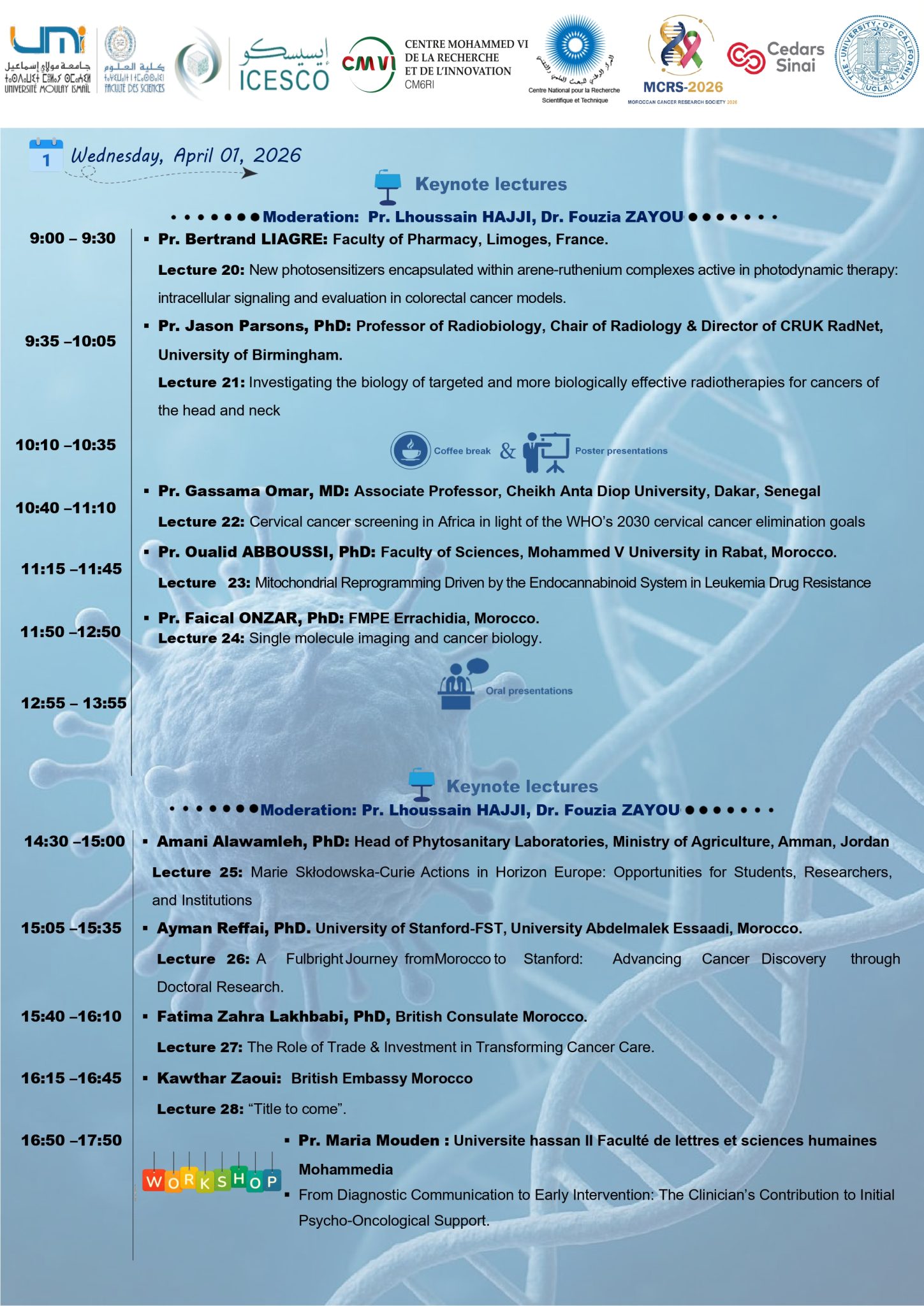
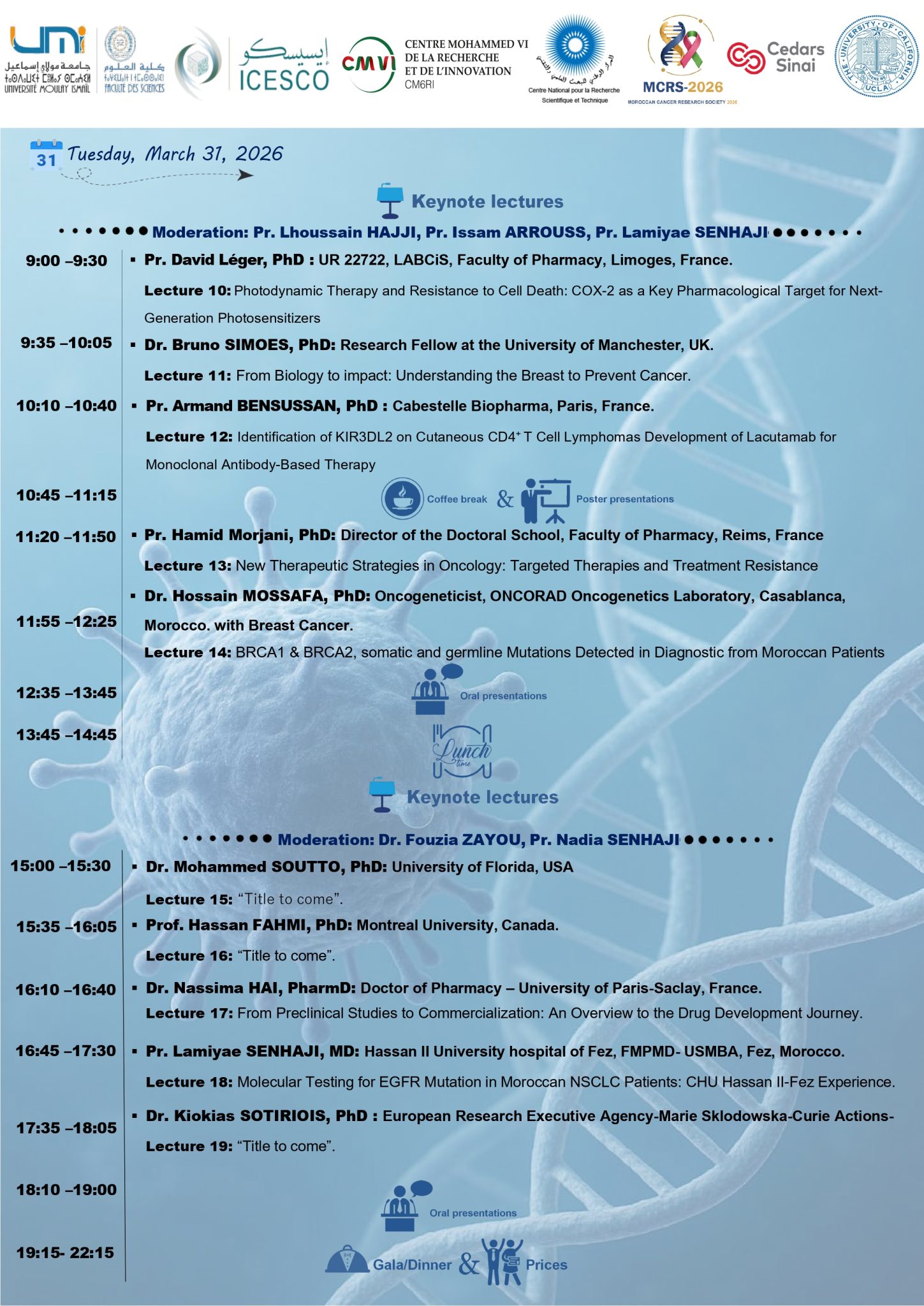
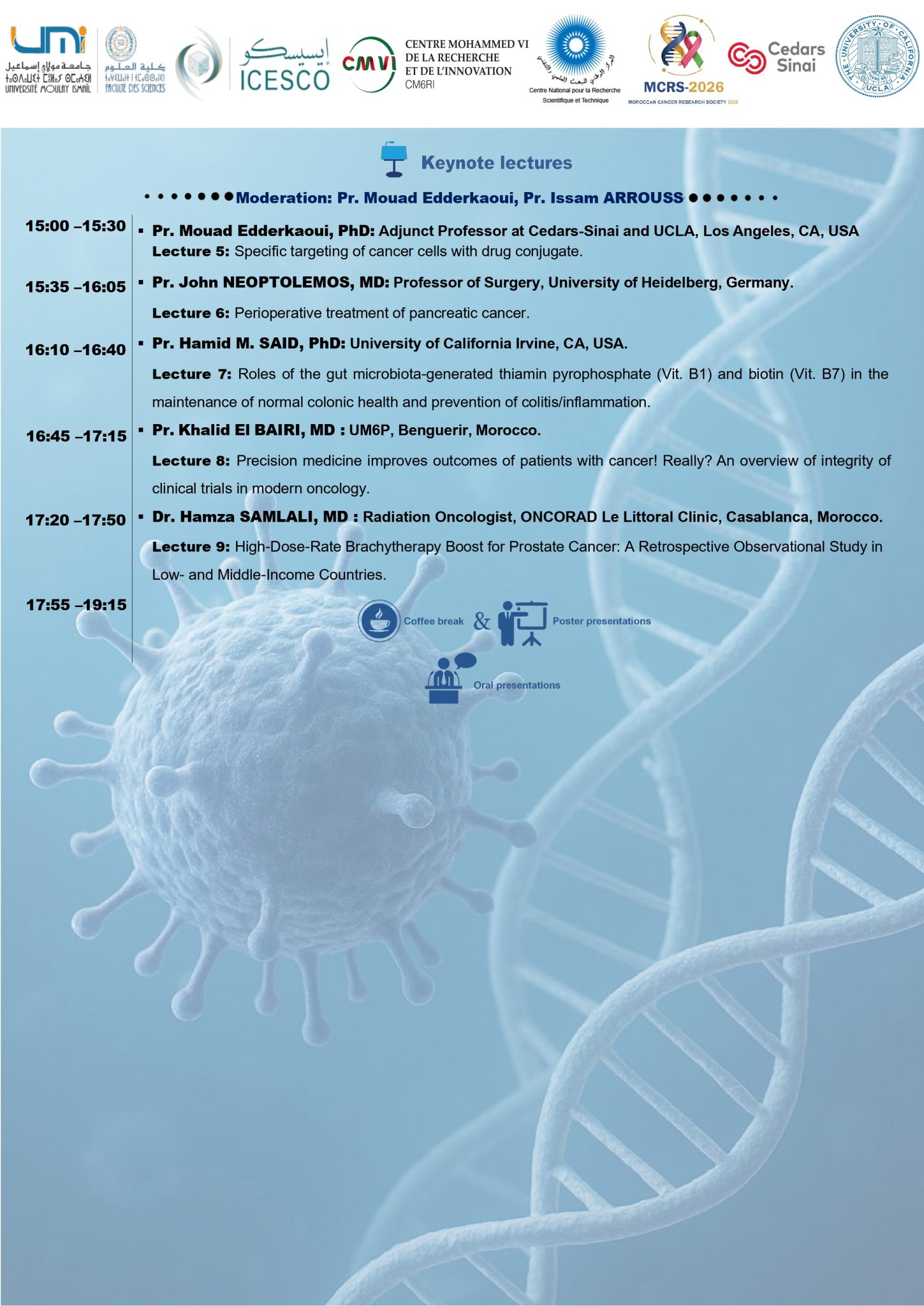
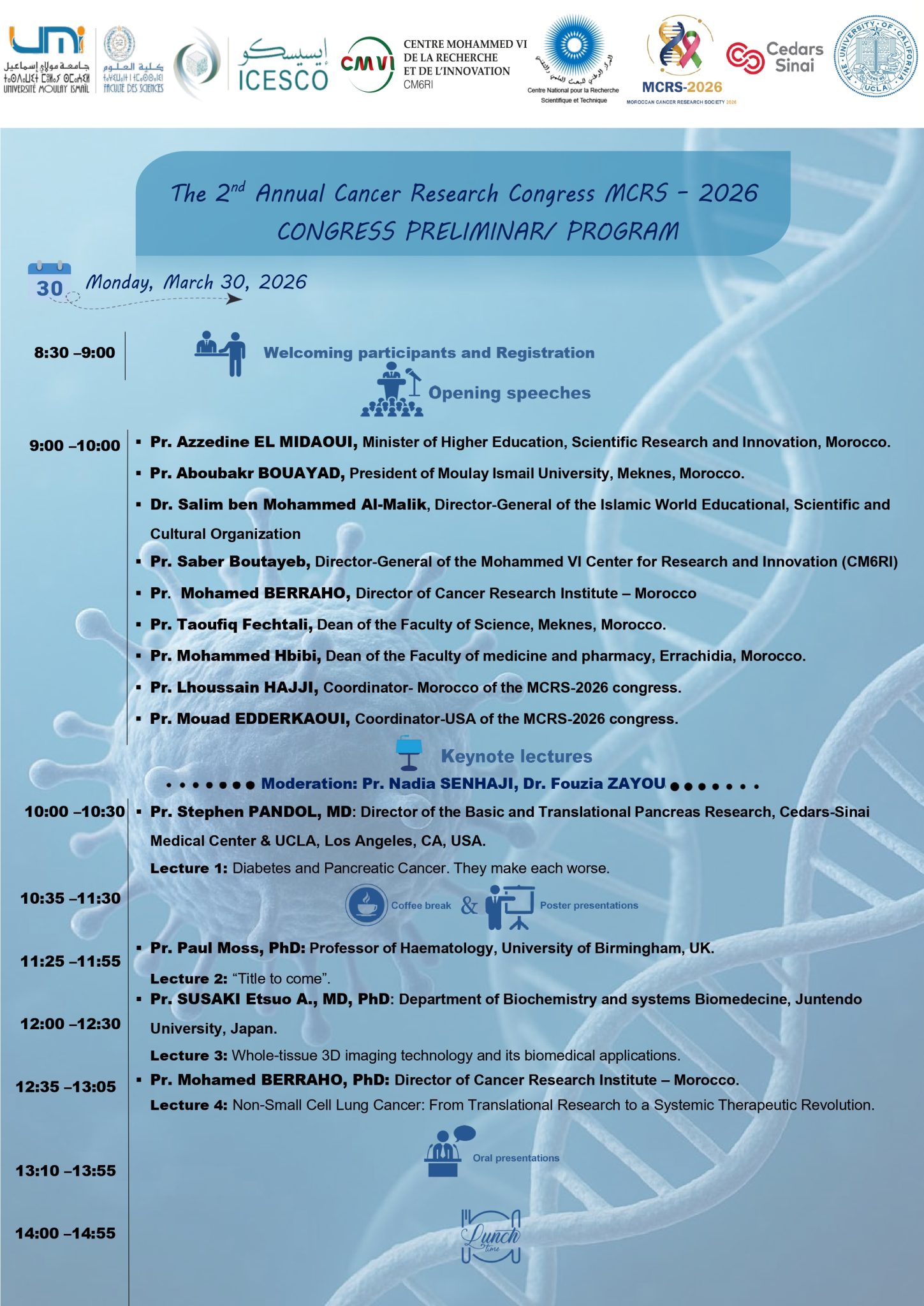
Preliminary Program

Location of event

Coordinators

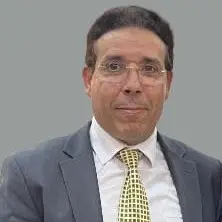
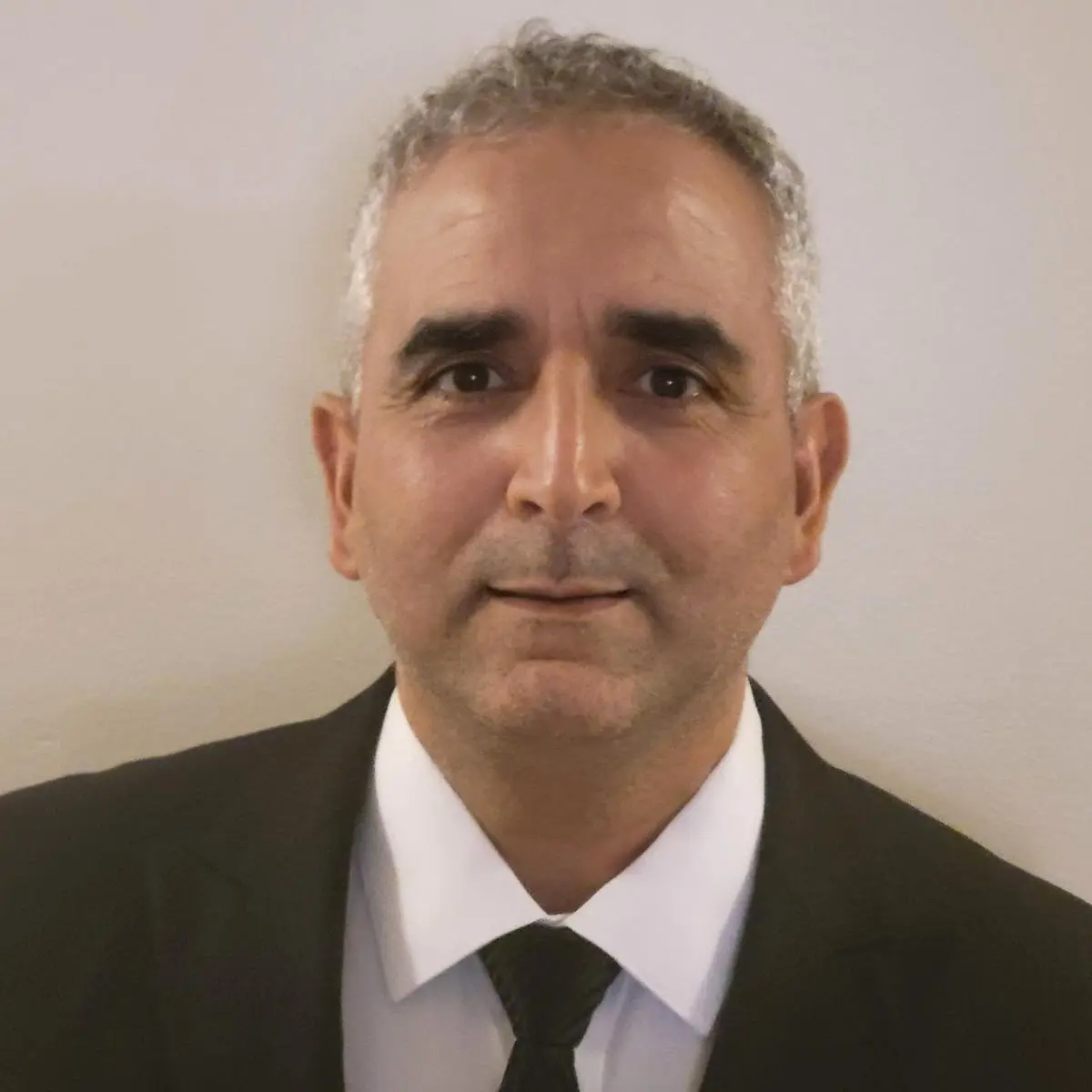
lhoussain hajji

Pr. Lhoussain Hajji

UMI, Meknes, Morocco
mouad edderkaou

Pr. Mouad Edderkaoui

CSMC & UCLA, USA
Honorary committee​

1

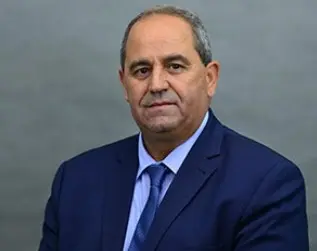
Professor Azzedine El Midaoui

Minister of Higher Education, Scientific Research and Innovation, Morocco

Β 

Prof. Azzedine El Midaoui is the Minister of Higher Education, Scientific Research and Innovation in Morocco. Before taking on this role, he was the President of Ibn Tofail University in Kenitra from 2014, where he worked to improve the university’s programs and research.

In 2018, he became President of the Conference of Presidents of Moroccan Universities, helping to guide cooperation and planning among the country’s universities. Since 2015, he has also served as a member of the High Council for Education, Training and Scientific Research, contributing to national education policies.

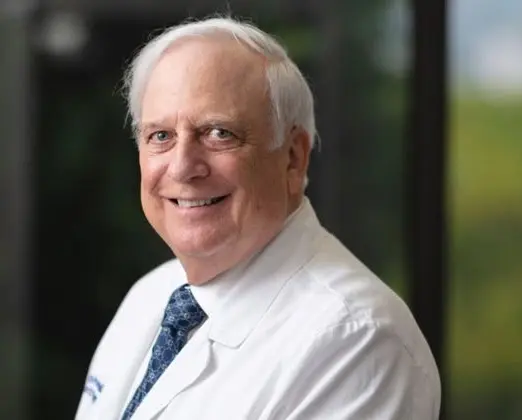
stephen pandol

Professor Stephen J. Pandol, MD

Director of Basic and translational Pancreas Research at Cedars-Sinai & Professor of Medicine at UCLA, USA

Professor Pandol leads the American Consortium on Chronic Pancreatitis, Diabetes, and Pancreatic Cancer, driving national efforts to advance understanding and treatment of pancreatic diseases. A former President of the American Pancreas Association, he also serves as Editor of Frontiers in Gastrointestinal Sciences and Associate Editor for several leading journals.

Professor Stephen J. Pandol is an internationally recognized leader in pancreatic physiology and disease. He serves as Director of Basic and Translational Pancreas Research at Cedars-Sinai Medical Centre. He is Professor of Medicine at the University of California, Los Angeles (UCLA), the Cedars-Sinai Medical Centre, and the Charles R. Drew University College of Medicine in Los Angeles.

He has authored over 450 peer-reviewed publications in top-tier journals and holds more than 20 patents related to cancer therapeutics. His groundbreaking work has earned him multiple honours, including two Lifetime Achievement Awards and the Research Mentor Award from the AGA.

aboukar

Professor Aboubakr Bouayad

President of University Moulay Ismail, Meknes-Morocco

Professeur Aboubakr Bouayad is a prominent Moroccan academic and researcher specializing in Materials Science and Engineering. He currently serves as the Acting President of Moulay IsmaΓ―l University (UMI) in MeknΓ¨s and is a Full Professor at the ENSAM (Γ‰cole Nationale SupΓ©rieure d’Arts et MΓ©tiers) in the same city.

His bibliography reflects a deep expertise in metallurgy, materials processing, and the development of sustainable industrial solutions.

Β 

Β 

capture d’écran 2026 02 09 123804

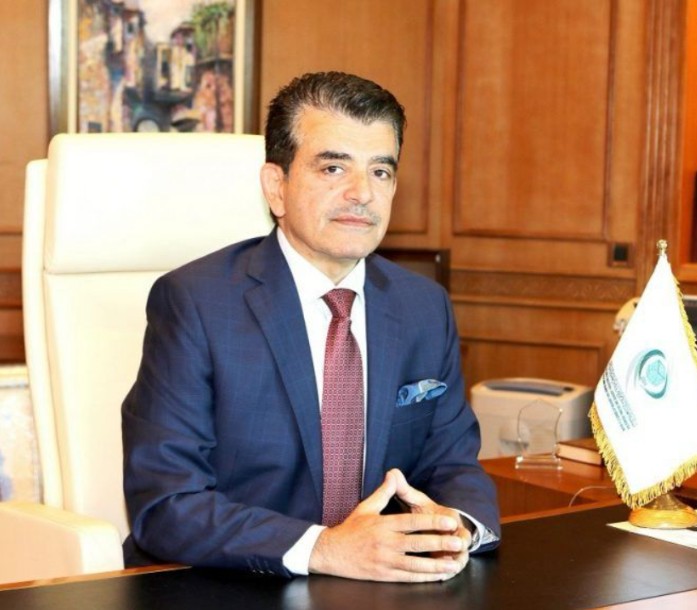
Dr. Salim bin Mohammed Al-Malik

Director-General of the Islamic World Educational, Scientific and Cultural Organization (ICESCO)

Dr. Salim bin Mohammed Al-Malik is a distinguished Saudi leader currently serving as the Director-General of the Islamic World Educational, Scientific and Cultural Organization (ICESCO). A physician by training, he holds a PhD in Medicine from King Saud University and specialized in pediatric allergy and immunology at prestigious institutions in the United States, including Georgetown University. Before transitioning into international diplomacy, he held several high-ranking positions within the Saudi Ministry of Education and the King Faisal Specialist Hospital, establishing himself as a prominent expert in health policy, scientific research, and international academic cooperation.

Since taking office at ICESCO in 2019, Dr. Al-Malik has spearheaded a strategic transformation of the organization under the vision of « The ICESCO We Want.Β Β» He has shifted the institution’s focus toward digital transformation, the integration of Artificial Intelligence in education, and the global protection of cultural heritage. Under his leadership, ICESCO has become more inclusive and transparent, prioritizing the empowerment of youth and women while fostering cross-civilizational dialogue. His dual background as a scientist and a diplomat allows him to bridge the gap between technical innovation and humanitarian development across the Islamic world and beyond.

paul moss

Professor Paul Moss, OBE, FMedSci

Deputy Head of the College of Medical & Dental Sciences and Professor of Haematology, University of Birmingham, UK

Β 

Professor Paul Moss is a world leader in human immunology and immunotherapy. He is Deputy Head of the College of Medical and Dental Sciences and Professor of Haematology at the University of Birmingham. In recognition of his contributions to biomedical research, Professor Moss was awarded an Officer of the Order of the British Empire (OBE) for services to immunotherapy and COVID-19 research. His research focuses on immune responses to cancer, viral infection, and transplantation, with major contributions to understanding T-cell immunity.

Professor Moss has held several prominent national leadership roles, including Chair of the Medical Research Council Infection and Immunity Board and Chair of the Cancer Research UK Clinical and Translational Research Committee. He also led the UK Coronavirus Immunology Consortium (UK-CIC), coordinating national efforts to study immune protection against COVID-19.

He has authored over 400 scientific publications in leading journals and is a Fellow of the Academy of Medical Sciences.

neoptolemos

Professor John Neoptolemos, FMedSci

Director of Pancreatic Oncology Unit, & Professor of Surgery, University of Heidelberg, Germany

Β 

Professor John P. Neoptolemos is Professor of Surgery and Senior Research Group Leader at the University of Heidelberg, Germany, and one of the world’s leading specialists in pancreatic cancer, with more than 500 peer-reviewed publications and 85,000 scientific citations. He is an internationally recognised surgeon-scientist whose work has significantly advanced translational cancer research.

Professor Neoptolemos is the founder of European Study for Pancreas Cancer Research (ESPAC) that has led the way for internationally collaborative pancreas cancer trials and now also includes the National Cancer Institutes (NCIs) of Canada and Japan and Australia. In 1997, he established the European Registry of Hereditary Pancreatitis and Pancreatic Cancer (EUROPAC), a major resource and focus for the study of genetic pancreas diseases. He also established key UK research infrastructures and received major honors, including the European Pancreatic Club Lifetime Achievement Award and the Henry Lynch Award.

capture d’écran 2026 02 22 075518

Hamid M. Said, PhD, PharmD

Distinguished Professor of Physiology & Biophysics and Medicine, University of California, Irvine (UCI) School of Medicine, USA

Hamid M. Said, PhD, PharmD, is a Distinguished Professor of Physiology & Biophysics and Medicine at the University of California, Irvine (UCI) School of Medicine. His research focuses on the molecular mechanisms of nutrient transport in the gastrointestinal tract and the physiology of vitamins, with a focus on the role and interaction between inflammation and nutrient absorption with cancer and gastrointestinal health.

Dr. Said has more than 360 peer-reviewed publications in top-tier journals.

thelastonecometee

Pr. Taoufiq Fechtali

Dean of the Faculty of Science, Meknes-Morocco

A recognized expert in Neurobiology and Physiology, Professor Taoufiq Fechtali boasts a distinguished academic career marked by a robust record of international scientific publications. His research primarily focuses on the functioning of the nervous system, the study of cerebral mechanisms, and the impact of environmental factors on biological health. Before assuming the leadership of the Faculty of Sciences in Meknes, he headed numerous research structures and coordinated international cooperation projects, placing experimental rigor and high-level publication at the core of his methodology. His work actively contributes to a deeper understanding of neurological pathologies and the development of innovative therapeutic solutions.

hbibi

Pr. Mohammed Hbibi

Dean of the Faculty of medicine and pharmacy, Errachidia-Morocco

Professor Mohammed Hbibi is a distinguished figure in the Moroccan medical and academic landscape, currently serving as the Dean of the Faculty of Medicine and Pharmacy in Errachidia. A specialist in Pediatrics, his career is defined by a commitment to both clinical excellence and the strategic expansion of medical education in the DrΓ’a-Tafilalet region.

A highly regarded expert in Pediatrics and Neonatology, Professor Mohammed Hbibi possesses an extensive scientific background focused on child health and medical pathology. His research interests encompass a wide range of pediatric clinical issues, contributing to the advancement of neonatal care and the management of pediatric diseases within the Moroccan healthcare system. Prior to his deanship, he established a strong reputation as a dedicated clinician and researcher, emphasizing the importance of evidence-based medicine and the integration of specialized clinical training into the university curriculum. His scientific contributions are reflected in his participation in national medical congresses and his role in supervising medical theses that address regional health challenges.

Organizing committee

nadia senhaji
Pr. Nadia Senhaji, PhD
UMI, Meknes
issam arrouss
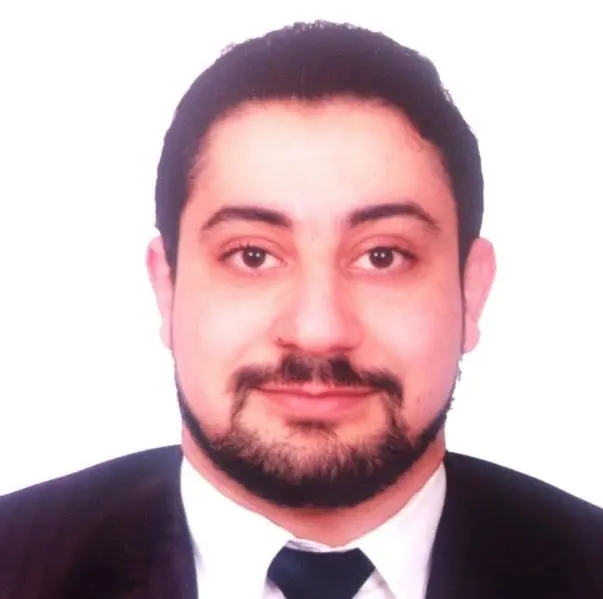
Pr. Issam Arrouss, PhD
UMI, Meknes
lhoussain hajji
Pr. Lhoussain Hajji, PhD
UMI, Meknes
mouad edderkaou
Pr. Mouad Eddarkaoui, PhD
Cedars-Sinai & UCLA, USA
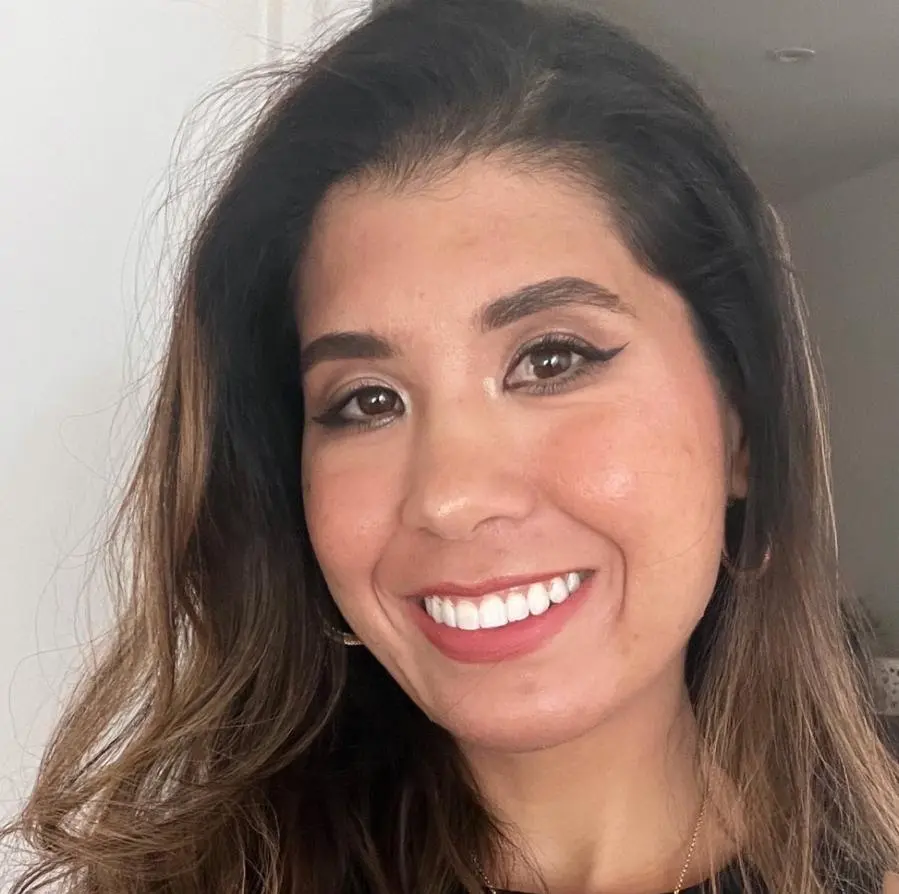
fouzia zayou
Dr. Fouzia Zayou, PhD
University of Manchester, UK
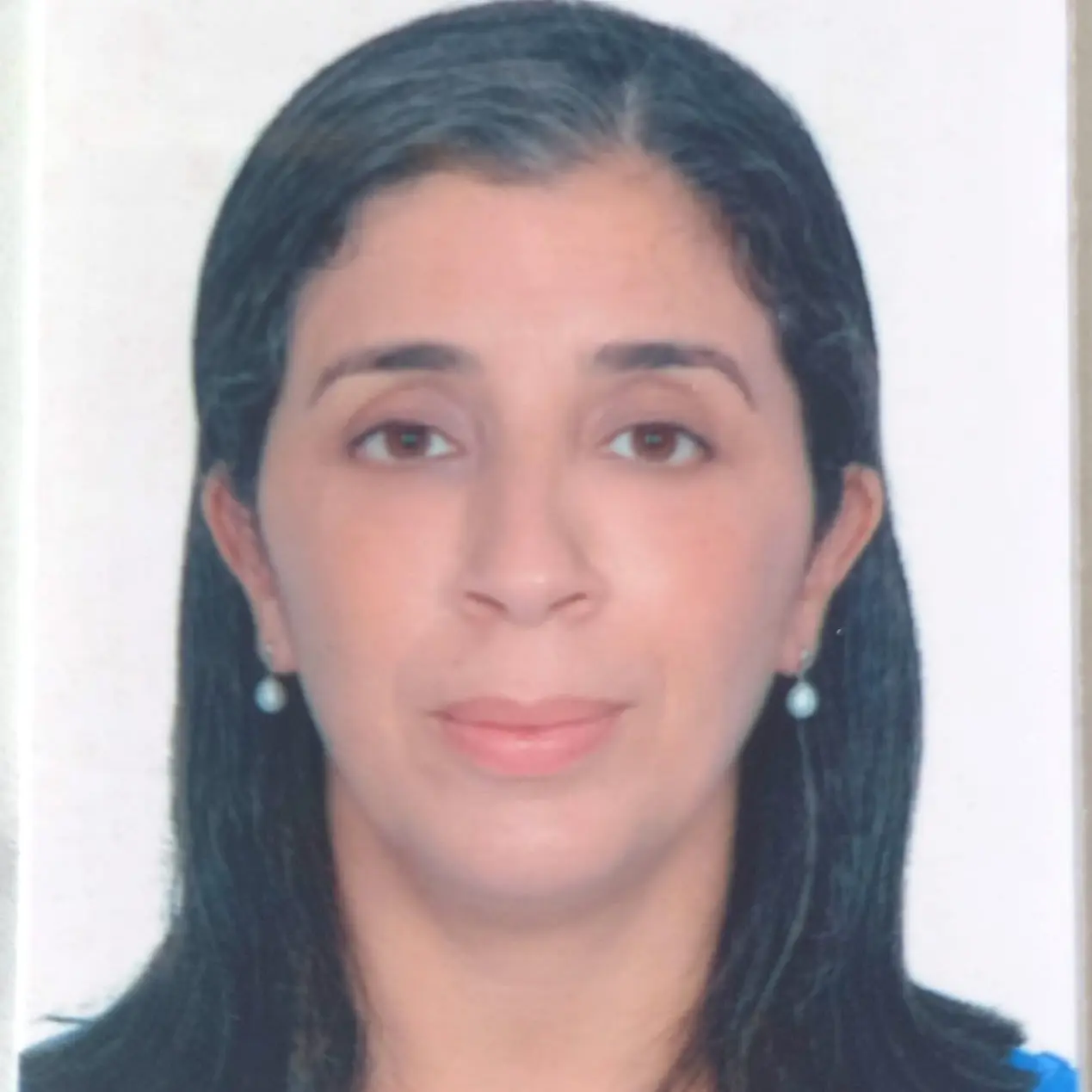
lamyea senhaji
Pr. Lamiyae Senhaji, MD
Hassan II UHC & USMBA, Fez

Support Committee

πŸ§‘β€πŸ« Pr. Meriame Abbassi, PhD
Β Β Β Β πŸ›οΈ ISPITS – Fez

πŸ§‘β€πŸ«Pr. Touria Zair, PhD
Β Β Β Β πŸ›οΈ UniversitΓ© Moulay Ismail (UMI) – Meknes

πŸ§‘β€πŸ«Pr. Bennacer Himmi, PhD
Β Β Β Β πŸ›οΈ ISPITS – Rabat

πŸ§‘β€πŸ«Pr. Merouane Ertel, PhD
Β Β Β Β πŸ›οΈ ISPITS – Rabat

πŸ§‘β€πŸ«Pr. El Bachir Bouhali, PhD
Β Β Β Β πŸ›οΈ UniversitΓ© Moulay Ismail (UMI) – Meknes

πŸ§‘β€πŸ«Pr. Aziz Drioiche, PhD
Β Β Β Β πŸ›οΈ ISPITS – Fez

πŸ§‘β€πŸ«Pr. Reda Kachmar, PhD
Β Β Β Β πŸ›οΈ ISPITS – Beni Mellal

πŸ§‘β€πŸ«Dr. Toufik Bouddine, PhD
Β Β Β Β πŸ›οΈ UniversitΓ© Moulay Ismail (UMI) – Meknes

πŸ§‘β€πŸ«Β Dr. Aziz Zouhri, PhD
Β Β Β Β πŸ›οΈ UniversitΓ© Moulay Ismail (UMI) – Meknes

Doctoral Committee

  • πŸŽ“ Salma Quiraouani Boucetta, UMI, Meknes
  • πŸŽ“ Younes Guennoun, UMI, Meknes
  • πŸŽ“Charaf Eddine Kassimi, UMI, Meknes
  • πŸŽ“Fedoua Diai, UMI, Meknes
  • πŸŽ“Oumayma Rharmaoui, UMI, Meknes
  • πŸŽ“Wissal Koukouch, UMI, Meknes
  • πŸŽ“Rafik El Mernissi, UMI, Meknes
  • πŸŽ“Eric Y. Yeo, UMI, Meknes
  • πŸŽ“Hafsa Hasnai, UMI, Meknes
  • πŸŽ“Rania Moubachir,Β UMI, Meknes

Scientific Committee

🌍 International & National Experts

πŸ‘€ Pr. ABBOUSSI Oualid, PhD
πŸ›οΈ FS, Rabat

πŸ‘€ Pr. Achir Khaoula, MD
πŸ›οΈ UMI, FMPE

πŸ‘€ Pr. Arrouss Issam, PhD
πŸ›οΈ FMPE – UMI, Meknes

πŸ‘€ Pr. Banacer Himmi, PhD
πŸ›οΈ ISPITS, Rabat

πŸ‘€ Pr. Ben Mkaddem Sanae, PhD
πŸ›οΈ UM6P, Benguerir

πŸ‘€ Pr. Benhallem Faouzia, PhD
πŸ›οΈ FS – UMI, Meknes

πŸ‘€ Pr. Benhnini Fouad, PhD
πŸ›οΈ FS – UMI, Meknes

πŸ‘€ Pr. Benomar Hakima, MD
πŸ›οΈ UIC, Casablanca

🌍 Pr. Bertrand Liagre, PhD
πŸ›οΈ Limoges, France

πŸ‘€ Pr. Bouachrine Mohamed, PhD
πŸ›οΈ FS – UMI, Meknes

🌍 Pr. Brim Hassan, PhD
πŸ›οΈ Howard University, Washington DC, USA

πŸ‘€ Pr. Chakir Said, PhD
πŸ›οΈ FS – UMI, Meknes

πŸ‘€ Pr. Chaachouay Hassan, PhD
πŸ›οΈ FST Errachidia

πŸ‘€ Dr. El Youssoufi Soumaya, MD
πŸ₯ Fez

πŸ‘€ Pr. Elattar Hicham, MD
πŸ›οΈ UM6P, Benguerir

πŸ‘€ Pr. Elbairi Khalid, MD
πŸ›οΈ UPM6, Benguerir

πŸ‘€ Pr. Elbouhali Bachir, PhD
πŸ›οΈ FS – UMI, Meknes

πŸ‘€ Pr. El Haloui Noureddine, PhD
πŸ›οΈ UIT, Kenitra

πŸ‘€ Pr. El Kadmiri Nadia, PhD
πŸ›οΈ Ibn Zohr University

🌍 Pr. Edderkaoui Mouad, PhD
πŸ›οΈ CSMC & UCLA, USA

πŸ‘€ Pr. Ertel Merouane, PhD
πŸ›οΈ ISPITS, Rabat

🌍 Pr. Fahmi Hassan, PhD
πŸ›οΈ Montreal University, CHUM, Canada

πŸ‘€ Pr. Fetjah Dounia, PhD
πŸ›οΈ FS – UMI, Meknes

πŸ‘€ Dr. Filali Z. Younes, PhD
πŸ›οΈ FS – UMI, Meknes

🌍 Dr. Gassama Omar, MD
πŸ₯ Clinical, UCLA, USA

🌍 Pr. Gérard Hubert Lizard, PhD
πŸ›οΈ University of Bourgogne, Inserm, France

πŸ‘€ Pr. Ghazal Hasan, PhD
πŸ›οΈ UM6SS, Casablanca

πŸ‘€ Pr. Hajjaj Hassan, PhD
πŸ›οΈ FS – UMI, Meknes

πŸ‘€ Pr. Hajji Lhoussain, PhD
πŸ›οΈ UMI, Meknes

πŸ‘€ Pr. Khallouki Farid, PhD
πŸ›οΈ FST, Errachidia

πŸ‘€ Khaoula Achir, PhD
πŸ›οΈ FMPE, Errachidia

πŸ‘€ Pr. Louati Sara, PhD
πŸ›οΈ FMP-UM5, Rabat

πŸ‘€ Maryam El Khayari, PhD
πŸ›οΈ FMPE, Errachidia

πŸ‘€ Pr. Mazouz Hamid, PhD
πŸ›οΈ FS – UMI, Meknes

πŸ‘€ Pr. Meriame Abbassi, PhD
πŸ›οΈ ISPITS, Fez

πŸ‘€ Pr. Mkaddem Sanae Ben, PhD
πŸ›οΈ UM6P, Benguerir

🌍 Pr. Moss Paul, MD
πŸ›οΈ University of Birmingham, UK

🌍 Pr. Murali Ramachandran, PhD
πŸ›οΈ CSMC, USA

🌍 Pr. Neoptolemos John, MD
πŸ›οΈ University of Heidelberg, Germany

🌍 Pr. Pandol Stephen, MD
πŸ›οΈ UCLA, USA

πŸ‘€ Pr. Remmali Said, PhD
πŸ›οΈ FS – UMI, Meknes

πŸ‘€ Pr. Rour El Habib, PhD
πŸ›οΈ FS – UMI, Meknes

πŸ‘€ Pr. Sefiani Majida, PhD
πŸ›οΈ FS – UMI, Meknes

πŸ‘€ Pr. Senhaji Lamiyae, MD
πŸ₯ Hassan II CHU & USMBA, Fez

πŸ‘€ Pr. Senhaji Nadia, PhD
πŸ›οΈ UMI, Meknes

🌍 Pr. Simoes Bruno, PhD
πŸ›οΈ University of Manchester, UK

🌍 Pr. Susaki Etsuo, A., M.D., Ph.D.
πŸ›οΈ Juntendo University, Tokyo, Japan

πŸ‘€ Pr. Touria Zair, PhD
πŸ›οΈ UMI, Meknes

πŸ‘€ Pr. Zaki Hanane, PhD
πŸ›οΈ EST, Khenifra

🌍 Dr. Zayou Fouzia, PhD
πŸ›οΈ University of Manchester, UK

Retour en haut